
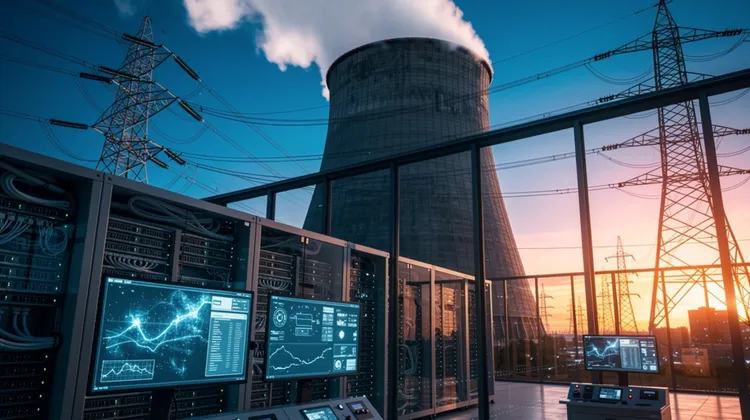
In the race to deploy generative AI at scale, a critical resource is being consumed at alarming rates: freshwater. While headlines focus on energy consumption and carbon emissions, the water used to cool hyperscale data centers—many powering AI models like ChatGPT—is emerging as a pressing concern for power grid operators, water utilities, and infrastructure reliability teams.
Recent reports from Google and Microsoft reveal that their global water consumption spiked by 20% and 34% respectively between 2021 and 2022, driven largely by AI workloads. In regions facing drought, this growth creates direct competition between data centers and local communities for limited freshwater supplies. For uptime professionals, this is not just an environmental issue—it’s a reliability risk.
The Data Center Water Footprint
A typical hyperscale data center can consume between 1 and 5 million gallons of water per day for cooling. AI training jobs, which run for weeks on thousands of GPUs, generate enormous heat loads that require constant cooling. The most common method—evaporative cooling—uses water as the primary heat exchange medium.
According to a 2023 study by the University of California, Riverside, training a single large language model like GPT-3 can consume 700,000 liters of freshwater. That’s equivalent to the water used by a small town of 1,000 people for a month. As AI models grow larger, this figure is expected to rise.
For critical infrastructure operators, the implications are twofold. First, data centers are becoming major water consumers in regions already stressed by drought. Second, water scarcity can force data centers to reduce operations or switch to less efficient cooling methods, potentially impacting uptime for AI services that power everything from grid management to healthcare diagnostics.
Why This Matters for Power and Infrastructure Teams
Water and power are inextricably linked. Thermoelectric power plants—which still generate the majority of electricity in the U.S.—require vast amounts of water for cooling. When data centers and power plants compete for the same freshwater sources, the grid faces simultaneous stress on both supply and demand.
A 2024 report from the U.S. Department of Energy highlighted that water availability is becoming a constraint for new data center developments in the Southwest. In Arizona, for example, several proposed data center campuses have been delayed due to water rights disputes. For utility operators, this means longer interconnection timelines and potential capacity shortfalls.
Moreover, AI itself is increasingly used to optimize water distribution and wastewater treatment. If water shortages force data centers to throttle AI workloads, these critical applications could be disrupted. The reliability of water infrastructure depends on the reliability of the data centers managing it—a feedback loop that uptime teams must understand.
Recent Developments: Google’s Water Targets and Microsoft’s Water-Positive Goal
In October 2023, Google announced a goal to replenish 120% of the freshwater it consumes by 2030. The company is investing in water restoration projects in watersheds where its data centers operate, including in Oregon and Arizona. Similarly, Microsoft committed to being “water positive” by 2030, meaning it will replenish more water than it consumes.
These targets are ambitious, but they face challenges. Restoration projects often take years to yield results, and the pace of AI growth may outstrip replenishment efforts. A 2024 analysis from Bloomberg NEF found that even with aggressive water efficiency improvements, data center water consumption in the U.S. could double by 2027.
For infrastructure teams, these corporate commitments signal a shift in how data centers manage water. Expect more data centers to adopt closed-loop cooling systems, which reduce water use but increase electricity consumption. This trade-off has direct implications for power grid planning and energy efficiency metrics.
Practical Takeaways for Uptime and Reliability Teams
- Monitor water availability in your region. If your data center or critical facility relies on municipal water, understand the drought risk and water rights landscape. Engage with local water utilities early.
- Evaluate cooling system efficiency. Transitioning from evaporative to closed-loop cooling can reduce water consumption but may increase power usage. Run scenario analyses to understand the impact on your overall uptime and cost.
- Track AI workload growth. As AI becomes more embedded in your operations, anticipate the water and power demands of the supporting infrastructure. Include water metrics in your sustainability reporting.
- Plan for water restrictions. In drought-prone areas, water rationing can force data centers to reduce cooling capacity. Have backup plans, such as temporary dry cooling or alternative water sources.
- Leverage AI for water management. AI can optimize water use in industrial processes, including cooling towers and wastewater treatment. Consider deploying AI tools to reduce your own water footprint.
The Bottom Line
The freshwater cost of AI is no longer a niche concern—it’s a material risk for critical infrastructure reliability. As AI workloads expand, water scarcity will become a limiting factor for data center growth, grid stability, and the uptime of essential services. For uptime warriors, understanding this connection is essential to building resilient, future-proof systems. The challenge is clear: balance the benefits of AI with the finite resources that sustain it.