
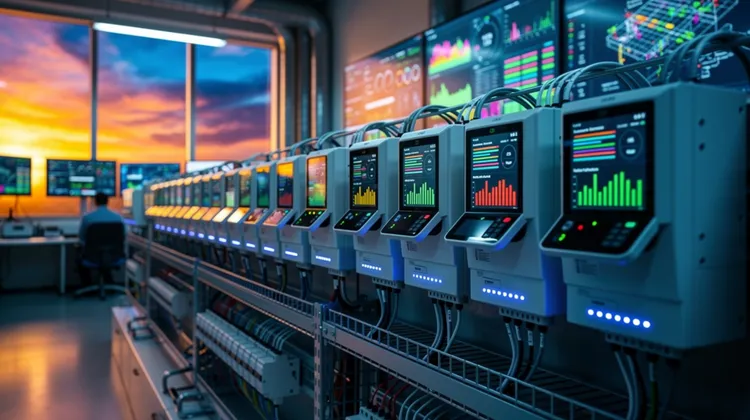
The electrical grid is no longer a passive network. It is becoming a dynamic, responsive system, and at the heart of this transformation is Advanced Metering Infrastructure. But not the AMI of a decade ago. The first generation brought us monthly reads and basic outage alerts. Today, AMI 2.0 is rewriting the rules of grid management, delivering high-frequency data streams that enable real-time decision-making at the edge.
For utility operators and reliability engineers, this evolution is not just an upgrade—it is a fundamental shift in how we monitor, control, and stabilize the grid. The granularity of data now available from next-generation meters allows for automated demand response, instantaneous outage detection, and predictive analytics that were previously the stuff of science fiction.
What Makes AMI 2.0 Different?
The core differentiator is data frequency. Traditional AMI systems typically collected meter readings every 15 to 60 minutes. While useful for billing and basic load profiling, this cadence was far too slow for real-time operational needs. AMI 2.0, by contrast, can capture and transmit data at intervals as short as one second to one minute.
This high-frequency data creates a near-continuous view of the grid's state. Utilities can now see voltage fluctuations, phase imbalances, and power quality issues as they happen. More importantly, they can act on this information before problems escalate into outages or equipment failures.
Enabling Automated Demand Response
Demand response programs have long been a tool for balancing load during peak periods. However, traditional programs relied on manual or semi-automated processes—sending signals to customers and hoping for a response. AMI 2.0 changes this by enabling fully automated, real-time demand response at the edge.
With high-frequency data, utilities can detect a sudden spike in demand and automatically trigger load-shedding commands to smart meters in specific areas. These commands can reduce non-critical loads, such as HVAC systems or water heaters, within seconds. The result is a more stable grid without requiring human intervention or customer inconvenience.
- Granular control: Commands can be sent to individual meters or aggregated by transformer, feeder, or neighborhood.
- Real-time feedback: Utilities can see the immediate impact of demand response actions, allowing for fine-tuning and optimization.
- Reduced peak load: Automated demand response can shave peak demand by 10-20%, deferring the need for expensive peaker plants.
Rapid Outage Detection and Restoration
One of the most critical capabilities of AMI 2.0 is its ability to detect outages in real time. Traditional outage detection relied on customer calls or SCADA measurements at substations, which could take minutes to hours to identify the location and extent of an outage.
With high-frequency data, meters can report a "last gasp" message the instant they lose power. This provides utilities with a precise map of affected areas, down to the individual meter. Additionally, meters can send a "first breath" message when power is restored, confirming that service has been re-established.
- Faster response: Outages can be detected in seconds, not minutes.
- Accurate localization: Utilities know exactly which transformers and feeders are affected.
- Restoration verification: No need for manual checks or customer callbacks.
According to a study by the Electric Power Research Institute, utilities using AMI 2.0 for outage detection have reduced average restoration times by 20-30%. For critical infrastructure like hospitals or data centers, this speed can mean the difference between a minor disruption and a major incident.
Edge Computing and Analytics
The sheer volume of data generated by AMI 2.0—potentially terabytes per day for a large utility—poses a challenge. Sending all this data to a central cloud for processing would overwhelm networks and introduce latency. This is where edge computing comes in.
Modern AMI 2.0 systems incorporate edge analytics directly into meters or local concentrators. This allows for real-time processing and decision-making at the edge, without waiting for a round trip to the cloud.
- Local anomaly detection: Meters can identify voltage sags or frequency deviations and trigger local responses.
- Data compression: Only actionable insights or aggregated summaries are sent to central systems, reducing bandwidth requirements.
- Resilience: Edge processing ensures continued operation even if network connectivity is temporarily lost.
Impact on Grid Resilience
The combination of high-frequency data, automated demand response, and edge analytics is transforming grid resilience. Utilities can now anticipate and mitigate issues before they cascade into widespread outages.
For example, a sudden drop in voltage on a feeder might indicate a failing transformer. AMI 2.0 can detect this anomaly, alert operators, and automatically reconfigure the grid to isolate the affected area while maintaining service to most customers. This proactive approach reduces both the frequency and duration of outages.
Challenges and Considerations
While the benefits of AMI 2.0 are clear, implementation is not without challenges. Utilities must invest in new meters, communication infrastructure, and analytics platforms. Data management and cybersecurity are also critical concerns.
- Data volume: Managing high-frequency data requires robust storage and processing capabilities.
- Cybersecurity: Each meter is a potential entry point for attackers. End-to-end encryption and secure authentication are essential.
- Interoperability: AMI 2.0 systems must integrate with existing SCADA, DMS, and OMS platforms.
Despite these hurdles, the business case for AMI 2.0 is strong. The Department of Energy estimates that widespread adoption of advanced metering could save U.S. utilities $1.5 billion annually in operational costs and reduce customer outages by 15%.
The Future of Grid Management
AMI 2.0 is not just an incremental improvement—it is a paradigm shift. By providing high-frequency data at the edge, it enables a level of real-time control that was previously impossible. As utilities continue to integrate renewable energy, electric vehicles, and distributed resources, the need for granular, responsive data will only grow.
The grid of tomorrow will be self-healing, automated, and resilient. And it will be built on the foundation of AMI 2.0. For reliability engineers and utility operators, the message is clear: the time to upgrade is now.