
The modern building is a paradox of efficiency and waste. While solar panels on rooftops generate clean direct current (DC) electricity, and LED lighting, computers, and variable-frequency drives all operate natively on DC, the building's internal power distribution remains stubbornly alternating current (AC). This mismatch forces multiple AC/DC conversion stages—each one bleeding energy as heat. The solution gaining traction among engineers and architects is the DC microgrid: a unified DC bus that directly connects solar photovoltaic (PV) arrays, battery storage, and DC-native loads, bypassing the traditional AC infrastructure entirely.
The inefficiency of the status quo is staggering. A typical commercial building today might have a solar array generating DC power, which is inverted to AC for distribution, then rectified back to DC for LED lighting, computers, or HVAC drives. Each conversion step incurs losses of 2-5%, depending on the equipment quality and load. Multiply that across dozens or hundreds of devices, and the cumulative waste can reach 15-20% of the building's total electricity consumption. A DC microgrid eliminates most of those conversions, delivering DC power directly from generation to load with minimal losses.
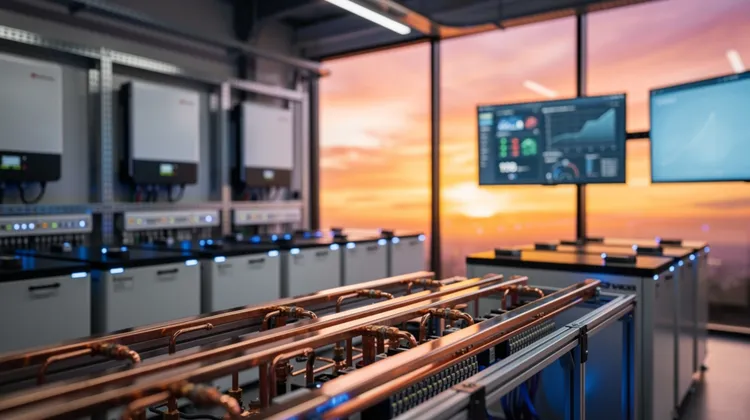
At the heart of a DC microgrid is the unified DC bus—a common voltage rail that connects all generation sources and loads. This bus typically operates at 380V DC or 48V DC, depending on the application. Solar PV arrays feed power directly into the bus through maximum power point tracking (MPPT) converters, which are simpler and more efficient than the inverters used in AC systems. Battery storage connects through bidirectional DC-DC converters, allowing seamless charge and discharge without the need for an inverter. DC-native loads like LED lighting, electronics, and electric vehicle chargers connect directly, while any remaining AC loads are served by a single, centralized inverter.
The efficiency gains are substantial. A study from the Lawrence Berkeley National Laboratory estimated that DC building distribution can reduce total energy consumption by 10-15% compared to conventional AC systems, with the greatest savings in buildings with high solar penetration and significant DC-native loads. In data centers, where power conversion losses are a major cost driver, DC distribution has been shown to improve efficiency by 15-20%. For commercial buildings, the savings translate directly to lower utility bills and reduced carbon footprints.
Battery storage integration is another key advantage. In an AC microgrid, the battery must be connected through a bidirectional inverter that converts DC to AC for distribution and back to DC for charging. Each conversion adds complexity and losses. In a DC microgrid, the battery connects directly to the DC bus, with a simple DC-DC converter managing charge and discharge. This not only improves round-trip efficiency by 3-5% but also reduces the number of power electronic components, lowering cost and improving reliability.
The rise of DC-native appliances is accelerating the shift. LED lighting, which now dominates commercial installations, operates natively on DC. Variable-frequency drives for HVAC compressors and fans use internal DC links. Computers, servers, and telecommunications equipment all run on DC power supplies. Even major appliances like induction cooktops and heat pump water heaters are increasingly available with DC input options. As the market for DC-native equipment grows, the economic case for DC microgrids strengthens.
Safety and standards are evolving to support this transition. The National Electrical Code (NEC) in the United States now includes specific provisions for DC microgrids, including requirements for overcurrent protection, disconnecting means, and grounding. The 380V DC standard, championed by the Emerge Alliance and other industry groups, provides a common voltage level that allows interoperability between manufacturers. These standards reduce engineering risk and simplify permitting, making DC microgrids more accessible to building designers.
Real-world installations are proving the concept. The University of California, Irvine, operates a 380V DC microgrid powering lighting and computer loads in a campus building, reporting 10% energy savings compared to a conventional AC system. In Japan, NTT Facilities has deployed DC microgrids in commercial buildings, achieving similar results. The Empire State Building, after its famous retrofit, incorporated DC distribution for its LED lighting system, contributing to its 38% energy reduction.
The path forward involves overcoming inertia rather than technical barriers. Most electrical contractors and engineers are trained on AC systems, and the supply chain for DC-rated breakers, switchgear, and connectors is still developing. However, as solar and battery storage become standard features in new construction, the logic of eliminating unnecessary conversions becomes undeniable. Building owners and developers who adopt DC microgrids today gain a competitive advantage in energy performance and future-proofing.
The shift to DC microgrids is not about replacing AC entirely—it is about using the right current for the right application. By integrating solar PV, battery storage, and DC-native appliances on a unified bus, modern buildings can eliminate the inefficiencies of multiple conversions and operate at a higher level of performance. As the technology matures and standards solidify, DC microgrids will become a standard feature of high-performance building architecture, delivering the efficiency gains that the industry has been chasing for decades.