
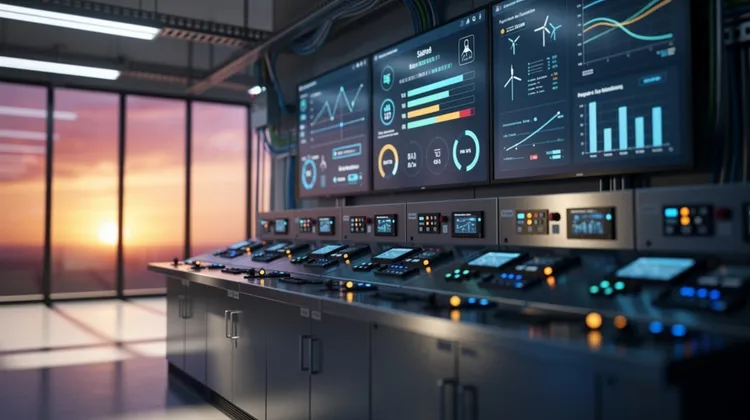
The concept of self-healing systems has moved from science fiction to operational reality. In industries where a single minute of downtime can cost millions, the ability for infrastructure to automatically detect, diagnose, and resolve faults without human intervention is no longer a luxury—it is a necessity. As uptime management evolves, self-healing systems are emerging as the cornerstone of reliability engineering, promising to reshape how critical infrastructure maintains continuous operation.
At its core, a self-healing system leverages artificial intelligence, machine learning, and real-time monitoring to create a closed-loop feedback mechanism. When a fault occurs, the system does not simply alert an operator; it initiates a predefined remediation sequence. This could involve rerouting network traffic in a data center, adjusting power distribution in an electrical substation, or recalibrating sensors in a manufacturing line. The goal is to restore normal operations within seconds or milliseconds, long before a human operator could even assess the situation.
How Self-Healing Systems Work
The architecture of a self-healing system rests on three pillars: detection, diagnosis, and remediation. Advanced sensors and monitoring tools continuously collect data on system performance, environmental conditions, and operational anomalies. Machine learning models trained on historical failure patterns analyze this data in real time to identify deviations from normal behavior. When a fault is detected, the system cross-references it against a library of known issues and automated response scripts.
- Detection: Continuous monitoring using IoT sensors and telemetry data.
- Diagnosis: AI-driven analysis to classify the fault and determine root cause.
- Remediation: Automated execution of corrective actions, such as restarting services, switching to backup systems, or adjusting parameters.
This process happens autonomously, often without any human awareness. In more complex scenarios, the system may escalate to a human operator only if the automated response fails or if the fault requires manual intervention.
Real-World Applications Across Critical Infrastructure
Self-healing capabilities are already being deployed across multiple sectors, demonstrating measurable improvements in uptime and operational efficiency.
Data Centers and Cloud Computing
Hyperscale data centers have been early adopters. Self-healing networks can automatically reroute traffic around failed switches, while server-level systems can restart crashed applications or migrate virtual machines to healthy hardware. Google, for example, has long used automated systems to handle server failures without impacting user experience.
Electrical Grids and Substations
In power transmission, self-healing grids use intelligent switches and reclosers to isolate faults and restore power to unaffected sections within milliseconds. This technology has reduced outage durations by up to 70% in some utility networks, according to recent industry reports.
Manufacturing and Industrial Automation
Factory floors equipped with self-healing PLCs and robotic systems can detect tool wear, misalignment, or material jams and automatically adjust parameters to maintain production quality. This reduces unplanned downtime and extends equipment lifespan.
Healthcare and Critical Medical Systems
Hospital IT networks and medical device systems are beginning to incorporate self-healing capabilities to ensure that patient monitoring, electronic health records, and life-support systems remain operational even during software failures or cyberattacks.
Benefits Beyond Reduced Downtime
While the primary value of self-healing systems is minimizing downtime, the benefits extend further into operational and financial performance.
- Reduced Operational Costs: Fewer manual interventions mean lower labor costs and reduced need for on-site technicians.
- Faster Recovery: Automated remediation happens in seconds compared to minutes or hours for human response.
- Improved Reliability: Systems that heal themselves experience fewer cascading failures and longer mean time between failures (MTBF).
- Scalability: As infrastructure grows, self-healing systems can manage complexity without proportional increases in human oversight.
- Data-Driven Insights: The continuous monitoring and analysis generate valuable data for predictive maintenance and system optimization.
Challenges and Considerations
Despite their promise, self-healing systems are not without challenges. Implementing them requires significant upfront investment in sensors, software, and AI model training. There is also the risk of automated actions causing unintended consequences if the fault diagnosis is incorrect. Organizations must carefully design fallback mechanisms and maintain human oversight for critical decisions.
Security is another concern. A compromised self-healing system could be weaponized to cause widespread disruption. Ensuring robust cybersecurity measures and encrypted communication channels is essential.
The Road Ahead
As AI and edge computing continue to advance, self-healing systems will become more sophisticated and widespread. Future iterations may incorporate predictive capabilities that not only respond to faults but anticipate them before they occur, further reducing the likelihood of downtime. The integration of digital twins will allow systems to simulate remediation strategies before executing them in the real environment, minimizing risk.
For industries that depend on continuous operation, the adoption of self-healing technology is not a question of if, but when. Those that embrace it will gain a competitive edge in reliability, efficiency, and operational resilience. The era of reactive maintenance is giving way to autonomous uptime management, and self-healing systems are leading the charge.