
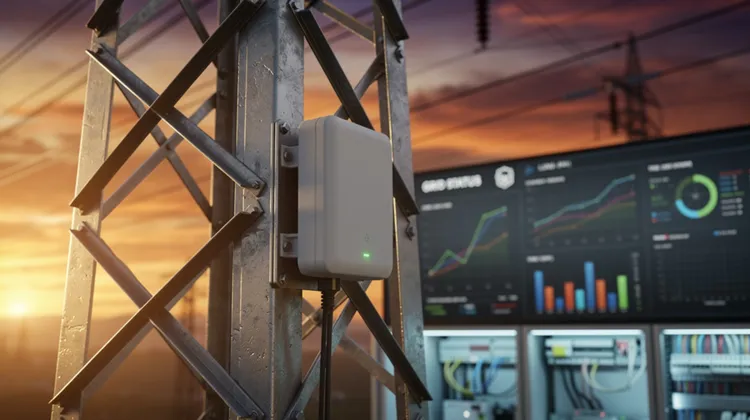
The backbone of modern civilization—the high-voltage transmission grid—stretches across continents, carrying electricity from power plants to substations and ultimately to homes, hospitals, and factories. For decades, utilities have relied on periodic ground patrols, helicopter inspections, and manual data collection to keep these lines operational. But as grids age and demand for reliability intensifies, that approach is no longer sufficient. A single undetected thermal hotspot or micro-crack in a transmission tower can cascade into a multi-hour blackout affecting millions.
Enter IoT-enabled asset management. By deploying wireless sensor networks (WSNs) directly on transmission towers and conductors, utilities are transforming reactive maintenance into a proactive, data-driven discipline. These sensors continuously monitor structural vibrations, conductor temperature, ambient humidity, and even ice buildup, transmitting real-time data to centralized analytics platforms. The result is a paradigm shift: faults are identified long before they escalate, maintenance is optimized, and uptime becomes a measurable, achievable target.
The Case for Continuous Monitoring
High-voltage transmission lines are exposed to extreme environmental stressors. Temperature fluctuations, wind-induced galloping, corrosion, and mechanical fatigue all take their toll. Traditional inspection cycles—often quarterly or biannual—leave months of vulnerability between checks. According to a 2023 study by the Electric Power Research Institute (EPRI), roughly 30% of transmission line outages are caused by equipment failure that could have been detected early with continuous monitoring.
Wireless sensors bridge that gap. They are low-power, ruggedized devices designed to operate in harsh outdoor conditions for years without battery replacement. Each sensor unit typically includes:
- Temperature sensors to detect conductor overheating from high current loads or poor connections.
- Accelerometers to measure tower vibration and structural sway, indicating fatigue or foundation issues.
- Strain gauges to monitor mechanical tension on conductors and hardware.
- Humidity and corrosion sensors to flag environmental degradation.
These devices communicate via mesh networks or cellular backhaul, forming a self-healing web of data points across hundreds of kilometers. The data is aggregated in the cloud or on-premises, where machine learning algorithms analyze trends and generate alerts.
From Data to Action: Predictive Maintenance in Practice
The real value of IoT-enabled asset management lies not in the sensors themselves but in the actionable insights they produce. Consider a common scenario: a transmission line experiences a sudden spike in ambient temperature near a specific tower. The sensor network detects the anomaly and correlates it with load data from the control center. The algorithm identifies a loose connection at a splice point, which is generating resistive heat. Without intervention, this hotspot could melt the conductor or cause a flashover.
Instead of dispatching a crew on an emergency call-out, the utility schedules a targeted maintenance window. The repair is completed in hours, not days, and the outage is avoided entirely. This predictive capability reduces unplanned downtime by up to 50% according to a 2022 report from the International Energy Agency (IEA) on digital grid technologies.
Key Benefits for Grid Operators
The advantages of deploying WSNs on transmission towers extend beyond outage prevention. They include:
- Reduced inspection costs – Fewer helicopter flyovers and ground patrols, especially in remote or difficult terrain.
- Extended asset lifespan – Early detection of corrosion or fatigue allows for timely repairs, delaying costly replacements.
- Improved workforce safety – Technicians only visit towers when data indicates a specific issue, reducing exposure to high-voltage environments.
- Regulatory compliance – Continuous monitoring provides auditable records of asset condition, satisfying grid reliability standards.
Challenges and Considerations
No technology is without its hurdles. Implementing IoT for high-voltage lines requires careful planning. Power supply for sensors is a primary concern—battery life must be optimized, and energy harvesting (e.g., from conductor magnetic fields or solar panels) is often necessary. Data transmission in remote areas can be spotty, requiring robust mesh networking or satellite backhaul. Cybersecurity is another critical layer; each sensor node is a potential entry point for malicious actors, so encryption and authentication must be baked into the system from the start.
Additionally, the sheer volume of data generated can overwhelm traditional IT systems. Utilities must invest in edge computing to pre-process data locally, sending only relevant alerts to central servers. This reduces bandwidth consumption and latency.
The Future: Digital Twins and Autonomous Grids
Looking ahead, IoT-enabled asset management is a stepping stone toward fully digitalized transmission networks. By combining sensor data with digital twin models, operators can simulate stress scenarios—such as a heatwave or ice storm—and predict how each tower and conductor will respond. This allows for dynamic rerouting of power to avoid overloads, a capability that will be essential as renewable energy sources introduce more variability into the grid.
Autonomous drones, integrated with sensor networks, are already being tested to perform targeted inspections based on sensor alerts. In the next decade, we may see self-healing grids where IoT systems automatically isolate faults and reroute power without human intervention.
#