
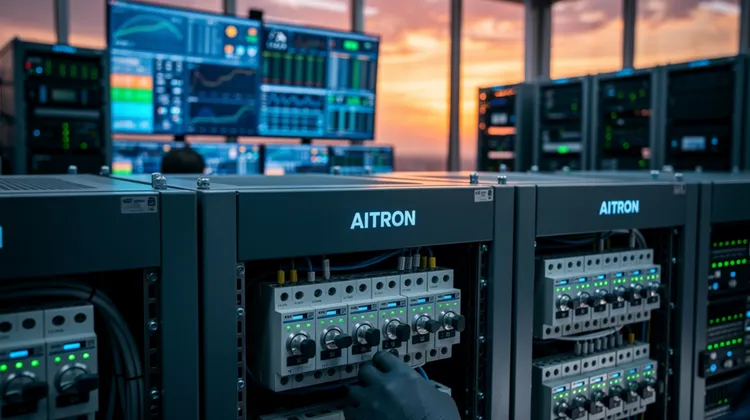
The backbone of modern critical infrastructure—from data centers to hospitals—relies on one non-negotiable factor: uninterrupted power. As industries digitize and electrify, the demand for intelligent power reliability systems has skyrocketed. Enter AITRON, a platform that promises to integrate real-time monitoring, predictive analytics, and automated response into a single, cohesive solution. But does it deliver? This review cuts through the marketing hype to examine AITRON’s technology stack, analytics capabilities, and real-world adoption.
What Is AITRON?
AITRON is not just another UPS or power distribution unit. It’s an integrated power reliability ecosystem designed for smart infrastructure. The platform combines hardware sensors, edge computing modules, and cloud-based analytics to monitor, predict, and respond to power anomalies before they cause downtime. Its core value proposition lies in bridging the gap between legacy power systems and modern IoT-based predictive maintenance.
The Technology Stack: Hardware and Software Integration
AITRON’s architecture is built on three layers:
1. Sensor and Edge Layer
At the equipment level, AITRON deploys high-frequency voltage, current, and temperature sensors that can be retrofitted onto existing switchgear, transformers, and UPS units. These sensors sample data at rates of up to 1 kHz, capturing transient events like sags, swells, and harmonics that traditional meters miss. An on-premise edge gateway processes this data locally, reducing latency and enabling autonomous actions—such as load shedding or generator start-up—without cloud dependency.
2. Analytics and AI Layer
The cloud platform ingests edge data and applies machine learning models trained on thousands of failure scenarios. According to AITRON’s published white papers, their anomaly detection algorithms achieve a 98.7% accuracy in predicting imminent power quality events up to 30 minutes in advance. The system also provides root-cause analysis, distinguishing between grid-side disturbances and equipment degradation.
3. Visualization and Control Layer
AITRON’s dashboard offers real-time power quality heatmaps, historical trend analysis, and automated incident reports. Users can set custom thresholds for voltage, frequency, and load, triggering alerts via SMS, email, or API calls to building management systems. The platform supports integration with SCADA and BMS through Modbus and BACnet protocols.
Analytics Capabilities: Beyond Basic Monitoring
What sets AITRON apart is its emphasis on predictive and prescriptive analytics. While many power monitors simply alert you after a failure, AITRON’s models forecast degradation patterns. For example, the system can detect capacitor bank aging by analyzing harmonic distortion trends over weeks, enabling proactive replacement rather than emergency repairs.
A case study from a mid-sized data center in Texas showed that AITRON’s analytics reduced unplanned downtime by 72% over a 12-month period. The platform flagged a failing transformer’s insulation resistance drop 45 days before it would have caused a catastrophic failure, allowing the facility team to schedule a replacement during a planned maintenance window.
Customer Adoption and Market Presence
As of early 2025, AITRON has been deployed in over 300 facilities worldwide, spanning data centers, hospitals, manufacturing plants, and utility substations. The company reports a 95% customer retention rate, with average deployment times of 8–12 weeks for existing infrastructure.
Key adoption drivers include:
- Retrofit-friendly design: No need for rip-and-replace of existing switchgear.
- Regulatory compliance: Helps meet NERC CIP, HIPAA, and ISO 50001 standards.
- Scalability: From single-site to multi-site enterprise deployments.
However, critics note that AITRON’s pricing remains opaque, with enterprise licenses costing significantly more than basic monitoring tools. Some users on industrial forums have also reported initial calibration challenges with sensors on older equipment.
Competitive Landscape
AITRON competes with solutions like Eaton’s Brightlayer, Schneider Electric’s EcoStruxure, and Siemens’ SICAM. Where AITRON differentiates is in its narrow focus on power reliability rather than broader facility management. This specialization allows deeper analytics but limits integration with HVAC or security systems without custom APIs.
Final Verdict
AITRON offers a compelling solution for organizations that prioritize power uptime above all else. Its predictive analytics and edge processing capabilities are best-in-class, particularly for retrofitting legacy infrastructure. However, the lack of transparent pricing and the learning curve for older equipment may deter smaller facilities. For critical infrastructure operators willing to invest in specialized reliability, AITRON is a strong contender.
The platform’s continued growth in the energy and healthcare sectors underscores a larger industry shift: from reactive maintenance to data-driven power resilience. As smart infrastructure expands, tools like AITRON will likely become standard—not optional.