
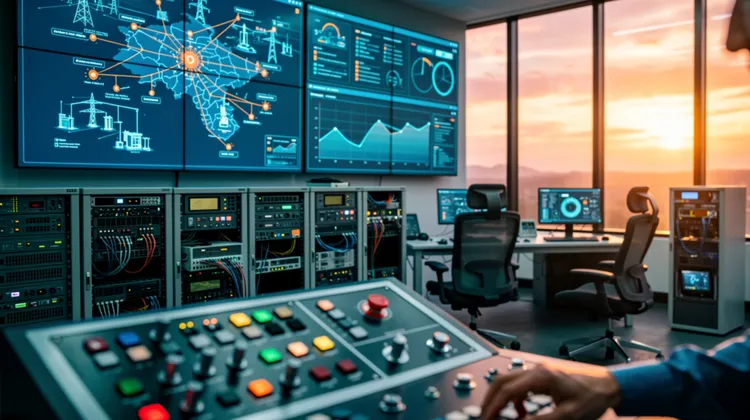
The electrical grid is the backbone of modern civilization, yet it operates under increasing strain from renewable integration, aging infrastructure, and extreme weather events. Traditional methods of testing grid responses—such as physical hardware simulations or live system changes—are costly, slow, and carry significant risk. Enter digital twins: virtual replicas of physical grid assets that allow engineers to simulate scenarios without touching a single transformer.
Digital twin technology is not new. Aerospace and manufacturing have used it for decades. But its application to grid modernization has accelerated sharply in recent years, driven by the need for resilience and the explosion of sensor data from smart meters, phasor measurement units, and SCADA systems. By creating a dynamic, real-time digital mirror of the grid, utilities can test, predict, and optimize with unprecedented precision.
How Digital Twins Work in Grid Operations
A digital twin is more than a static 3D model. It is a living simulation that ingests real-time data from sensors embedded across the grid—voltage levels, current flows, transformer temperatures, line loading, and weather conditions. This data updates the twin continuously, ensuring it reflects the actual state of the physical asset.
Engineers can then run "what-if" scenarios: What happens if a major substation goes offline during peak demand? How does a sudden solar generation drop affect frequency stability? What is the optimal sequence for switching circuits during maintenance? The twin provides answers in minutes, not days, without risking equipment failure or blackouts.
The technology relies on advanced machine learning algorithms to predict behavior under thousands of variables. For example, a digital twin of a transmission line can model thermal expansion under varying loads and ambient temperatures, helping operators determine safe capacity margins.
Key Benefits for Grid Modernization
Risk-Free Scenario Testing
The most immediate advantage is safety. Testing a contingency like a transformer failure or a cyberattack on a live grid is reckless. With a digital twin, engineers can simulate worst-case events repeatedly, refine response plans, and train operators in a controlled environment. This reduces the likelihood of cascading failures during real incidents.
Improved Asset Management
Aging infrastructure is a major challenge for utilities. Digital twins enable predictive maintenance by analyzing sensor data for signs of wear, such as abnormal vibration in a generator or insulation degradation in a cable. Instead of replacing equipment on a fixed schedule, utilities can target interventions precisely when needed, extending asset life and reducing costs.
Enhanced Renewable Integration
Solar and wind generation are variable and decentralized, making grid stability harder to maintain. Digital twins model the impact of weather forecasts on renewable output and simulate how storage systems, demand response, and conventional plants should adjust. This allows operators to balance supply and demand more effectively, even with high penetration of renewables.
Faster Restoration After Outages
When a fault occurs, digital twins help pinpoint the location and cause quickly. By comparing real-time data to the twin’s baseline, engineers can isolate the problem—whether it is a downed line, a failed breaker, or a cyber intrusion—and simulate restoration steps before executing them in the field.
Real-World Applications
Several utilities and grid operators have already deployed digital twins at scale. In the United States, the Electric Power Research Institute (EPRI) has developed digital twin frameworks for substations and distribution networks, allowing member utilities to test automation strategies. In Europe, transmission system operators like TenneT use digital twins to manage cross-border power flows and congestion.
A notable example is the collaboration between Siemens and the German utility E.ON, which created a digital twin of a 110-kV substation. The twin simulates switching operations, fault currents, and protection relay coordination. This has reduced testing time by 80% and eliminated the need for expensive physical mock-ups.
In the data center sector—an increasingly critical part of energy infrastructure—digital twins model cooling systems, power distribution units, and backup generators. Operators can test load shedding scenarios without disrupting server operations, ensuring uptime for clients.
Challenges to Adoption
Despite its promise, digital twin deployment faces hurdles. The primary obstacle is data quality. A twin is only as accurate as the data feeding it. Many utilities still rely on manual meter readings or outdated SCADA systems with low granularity. Upgrading sensor networks requires significant capital investment.
Another challenge is computational complexity. High-fidelity digital twins of entire grids require massive processing power and sophisticated software. Not all utilities have the IT infrastructure or in-house expertise to manage these systems.
Cybersecurity is also a concern. A digital twin that mirrors a live grid is a valuable target for attackers. If compromised, it could be used to plan physical attacks or manipulate operator decisions. Robust encryption, access controls, and network segmentation are essential.
The Future of Digital Twins in Grids
As artificial intelligence and edge computing mature, digital twins will become more autonomous. Instead of just simulating scenarios, they will recommend actions in real time, closing the loop between prediction and control. This is sometimes called a "digital twin for operations" or "twin-to-twin" communication, where multiple twins of different assets coordinate automatically.
Standardization is also advancing. The International Electrotechnical Commission (IEC) is developing standards for digital twin interoperability, ensuring that twins from different vendors can share data and models. This will accelerate adoption across the industry.
The grid of the future will not be managed by humans alone. It will be a partnership between operators and intelligent digital replicas that see what humans cannot. Digital twins are the bridge between today’s reactive grid and tomorrow’s proactive, resilient infrastructure. For utilities serious about modernization, they are no longer optional—they are essential.