
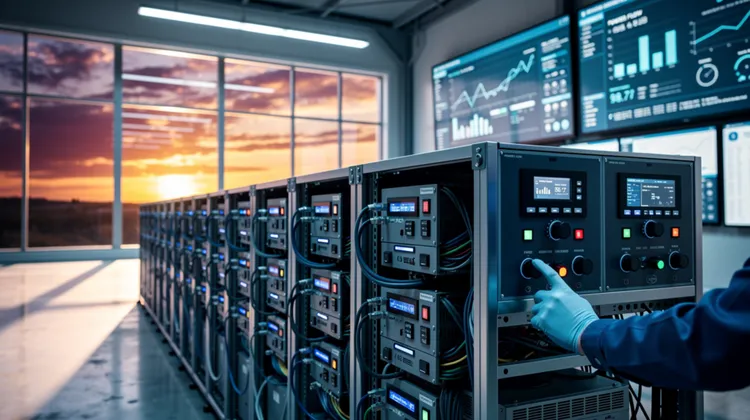
The rapid deployment of distributed energy resources (DERs)—from rooftop solar arrays and battery storage systems to electric vehicle chargers and microgrids—is fundamentally reshaping the electrical grid. While these assets offer significant benefits in terms of resilience, sustainability, and energy independence, they also introduce a sprawling and complex attack surface that traditional grid security frameworks were never designed to handle. The perimeter-based defenses that once protected centralized power plants are obsolete in a landscape where thousands of intelligent, internet-connected devices sit at the edge of the network.
For Uptime Warriors, the challenge is clear: protecting critical infrastructure now extends beyond the substation fence. The convergence of operational technology (OT) and information technology (IT) within DER deployments creates a cyber-physical environment where a digital intrusion can quickly translate into physical disruption. A compromised inverter, for instance, is not just a data breach; it is a potential trigger for voltage instability, frequency deviations, or even a localized blackout. The threat is not theoretical. Industry reports indicate that attacks on energy infrastructure have risen sharply, with a significant portion of these incidents targeting the less-protected edge devices that are proliferating at an unprecedented rate.
To secure this new frontier, the industry must move beyond conventional security postures and embrace a philosophy built on zero-trust architecture, continuous monitoring, and real-time anomaly detection. This article explores the critical components of a robust cyber-physical protection strategy for DERs, offering a practical roadmap for engineers, reliability managers, and security professionals tasked with keeping the grid online.
The Expanding Attack Surface: Why DERs Are a Prime Target
The fundamental issue with DERs is their inherent distribution and heterogeneity. Unlike a single large power plant, a regional network of solar panels, wind turbines, and storage units comprises thousands of endpoints, each with its own firmware, communication protocols, and potential vulnerabilities. This complexity creates a broad attack surface that is difficult to inventory, let alone secure.
Characteristics of Vulnerable DER Deployments
Several factors make DERs particularly susceptible to cyber threats:
- Legacy Protocols: Many DERs still rely on older communication standards like Modbus and DNP3, which lack built-in encryption and authentication.
- Remote Accessibility: To manage distributed assets, operators often rely on remote access, creating potential entry points for attackers if not secured with multi-factor authentication and VPNs.
- Limited Compute Resources: Edge devices often have constrained processing power and memory, making it difficult to run traditional security software like antivirus or host-based intrusion detection systems.
- Physical Accessibility: Unlike locked substations, many DERs are located in accessible areas, such as rooftops or open fields, making them susceptible to physical tampering that can lead to cyber compromise.
The convergence of these factors means that a single unpatched smart inverter could serve as a foothold for a malicious actor to pivot into the broader grid network. The 2016 Ukraine power grid attack, which used spear-phishing to compromise corporate networks and then remotely tripped breakers, demonstrated the devastating potential of such an intrusion. In a DER-rich grid, the scale of potential disruption is magnified exponentially.
Zero-Trust Architecture: Never Trust, Always Verify
The traditional security model assumes that everything inside a network perimeter is safe. This "castle-and-moat" approach fails in a distributed environment. Zero-trust architecture (ZTA) flips this assumption, operating on the principle that no device, user, or network segment is trustworthy by default. Every access request must be continuously verified, regardless of its origin.
Implementing Zero-Trust for DERs
Adopting a zero-trust model for DERs involves a fundamental shift in how access is granted and monitored:
- Micro-Segmentation: The network is divided into small, isolated zones. A compromised DER cannot easily communicate with a substation controller or the central management system. This limits lateral movement, containing the blast radius of any single attack.
- Identity and Access Management (IAM): Every user, device, and application is granted a unique identity. Access is granted on a least-privilege basis, meaning each entity only has the minimum permissions required to perform its function. This is enforced through robust authentication, including multi-factor authentication for all human operators.
- Continuous Verification: Trust is not a one-time grant. The system continuously monitors the behavior of devices and users, revoking access if any anomalous activity is detected. For example, if a solar inverter begins sending an unusually high volume of data packets, its access can be immediately terminated.
For Uptime Warriors, implementing zero-trust is not just about software. It requires a granular understanding of the operational workflows and data flows within the DER network. Every communication path must be mapped and validated, and policies must be enforced at the network level, often through next-generation firewalls and software-defined networking.
Real-Time Anomaly Detection: The Cyber-Physical Sentinel
Zero-trust architecture provides a strong defensive foundation, but it is not a panacea. The most sophisticated attacks may still find a way through. This is where real-time anomaly detection becomes the critical safety net. In a cyber-physical system, anomalies are not just about unusual network traffic; they are about deviations from expected physical behavior.
The Role of Machine Learning in Grid Security
Traditional rule-based security systems are inadequate for the dynamic nature of power systems. An attacker could exploit a legitimate control action to cause physical damage, bypassing any signature-based detection. Machine learning (ML) models, however, can learn the normal behavioral patterns of a specific DER or a collection of assets, creating a dynamic baseline.
- Behavioral Analysis: ML algorithms can analyze data streams from sensors, controllers, and network devices to identify subtle deviations. For instance, a sudden change in a battery's charging curve or a slight frequency irregularity that does not match the system's predictive model could indicate a cyber intrusion.
- Correlation of IT and OT Data: The most powerful anomaly detection systems correlate events across both the IT and OT domains. A suspicious login attempt on a management console (IT) combined with an unexpected command to a breaker (OT) provides a much stronger signal than either event alone.
- Predictive Maintenance: Anomaly detection is not only for security. The same models can identify equipment degradation, allowing for predictive maintenance that prevents unplanned downtime and strengthens overall reliability.
The goal is to move from a reactive stance—responding to alerts after a breach—to a proactive one where the system detects and halts an attack in its earliest stages, preventing cascading failures before they begin.
The Path Forward: Integrating Security and Reliability
Securing distributed energy resources is not a one-time project but an ongoing operational discipline. It requires a holistic approach that integrates cybersecurity into every phase of the asset lifecycle, from procurement and commissioning to daily operations and decommissioning.
- Secure Supply Chain: Ensuring that DERs and their components are sourced from trusted vendors and that firmware is verified before installation is the first line of defense.
- Standardized Communication: Pushing for the adoption of secure, modern protocols like IEC 61850, which includes built-in security features, over legacy systems.
- Collaboration and Information Sharing: The energy sector must foster a culture of sharing threat intelligence. What affects one utility's DER fleet can affect another's, and collective defense is essential.
The proliferation of DERs is an unstoppable trend, driven by economics, policy, and environmental imperatives. For Uptime Warriors, the mission is to ensure that this transformation does not come at the cost of grid reliability. By embracing zero-trust principles and deploying sophisticated real-time anomaly detection, we can build a cyber-physical defense that is as distributed and resilient as the energy resources it protects. The edge is the new frontline, and securing it is the key to a stable and secure energy future.