
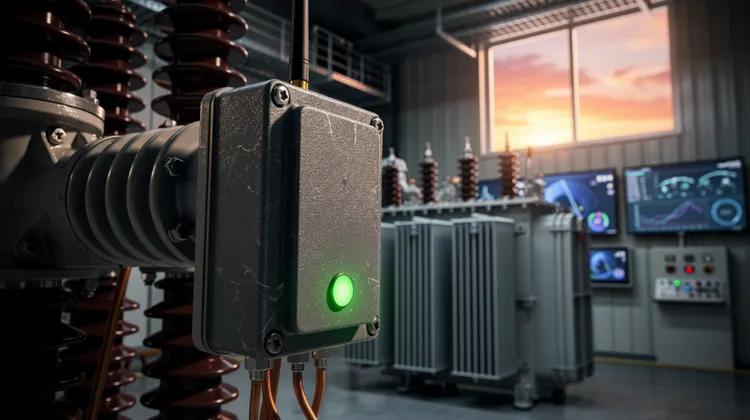
In the high-stakes world of critical infrastructure, knowing exactly where your equipment is at any given moment is no longer a luxury—it's a necessity. From a misplaced $50,000 generator in a sprawling power plant to a critical pump in a hospital's HVAC system, asset visibility directly impacts uptime, safety, and the bottom line. Enter the era of real-time equipment tracking via smart tags, where small, connected sensors are delivering big returns in operational intelligence.
For decades, asset tracking relied on manual audits, barcode scans, and spreadsheets. These methods are not only labor-intensive but also inherently delayed. By the time a missing asset is discovered, hours or days of productivity may have been lost. Smart tags, powered by the Internet of Things (IoT), change this paradigm entirely. They provide continuous, automated visibility into the location, status, and condition of equipment, enabling maintenance teams to shift from reactive firefighting to proactive management.
How Smart Tags Work
At their core, smart tags are compact wireless sensors that attach directly to equipment. They communicate location and telemetry data to a central platform via various protocols, including Bluetooth Low Energy (BLE), Ultra-Wideband (UWB), LoRaWAN, or cellular IoT (LTE-M/NB-IoT). The choice of protocol depends on the environment and range requirements. A hospital might use BLE for room-level tracking, while a sprawling refinery might rely on LoRaWAN for kilometer-wide coverage.
The tags themselves are more than just beacons. Modern smart tags incorporate sensors for temperature, humidity, vibration, shock, and even light exposure. This means they don't just tell you where an asset is—they tell you how it's being treated and whether it's operating within safe parameters. When a tag detects an anomaly, such as excessive vibration on a backup generator that hasn't been run in months, it triggers an alert. This predictive capability is a cornerstone of modern maintenance strategies.
The Shift from Passive to Active Visibility
Traditional RFID systems are passive. They require a reader to be in close proximity to the tag to capture data. Smart tags, in contrast, are active. They broadcast their data at regular intervals, creating a continuous stream of location and condition information. This shift from "polling" to "publishing" is fundamental.
Consider a data center with thousands of critical assets, from servers to cooling units. With passive tracking, locating a specific server for maintenance could take a technician 15 minutes of scanning. With smart tags, the technician pulls up a digital twin of the facility on a tablet, sees the exact rack and U-position of the asset, and walks directly to it. The time saved per task adds up rapidly. Industry studies indicate that real-time location systems (RTLS) can reduce search time for assets by up to 40%, directly improving mean time to repair (MTTR).
Predictive Insights from Asset Movement
One of the most powerful capabilities of smart tagging is the ability to analyze movement patterns. Equipment that is constantly on the move, such as portable generators, pumps, or medical devices, can be tracked to understand utilization rates. Is a backup generator being moved too often, increasing wear on its wheels and frame? Is a critical ventilator sitting idle in a storage closet while another floor is short on supply?
This data feeds directly into predictive maintenance models. By correlating movement data with condition data, teams can identify patterns that precede failure. For example, a pump that is frequently moved and subjected to high shock events is statistically more likely to develop seal failures. The system can flag this pump for an early inspection, preventing an unexpected breakdown during a critical process.
Integration with Existing Maintenance Systems
Smart tags do not operate in a silo. Their data flows into computerized maintenance management systems (CMMS) and enterprise asset management (EAM) platforms. This integration is where the true value emerges. When a smart tag reports that a piece of equipment has been moved to a new location, the CMMS automatically updates its asset register. When a tag reports a temperature spike, it can automatically generate a work order for inspection.
This closed-loop system eliminates manual data entry and reduces the risk of human error. Maintenance teams can trust that their digital records reflect physical reality. For critical infrastructure operators, this trust is invaluable. It ensures that emergency response plans are based on accurate asset locations, that regulatory compliance audits are seamless, and that spare parts are always where they are expected to be.
Challenges and Considerations
Implementing a smart tag system is not without its challenges. The first is infrastructure. BLE and UWB systems require a network of fixed readers or gateways to triangulate tag positions. In large facilities, this can be a significant upfront investment. However, the cost of these systems has dropped dramatically in recent years, and the ROI from reduced downtime and lost assets often justifies the expense.
Battery life is another consideration. Active tags require power, and changing batteries on thousands of tags is impractical. Many modern tags are designed to last 3-5 years on a single coin cell, and some are exploring energy harvesting technologies that draw power from ambient vibrations or thermal gradients.
Finally, data security is paramount. A smart tag network is an attack surface. If an attacker can spoof tag data, they could misdirect maintenance teams or create false alerts. Encryption, authentication, and network segmentation are essential safeguards.
The Future of Asset Intelligence
As edge computing and 5G networks mature, the capabilities of smart tags will only expand. We are moving toward a world where every piece of critical equipment is a node on a digital nervous system, constantly reporting its health and location. Machine learning algorithms will analyze this data to predict failures weeks in advance, recommend optimal maintenance schedules, and even autonomously dispatch robots to retrieve or service assets.
For now, the immediate benefit is clear: real-time equipment tracking via smart tags provides the visibility and predictive insights that modern maintenance teams need to maximize uptime. In an industry where every minute of downtime carries a significant cost, that visibility is not just valuable—it is essential.