
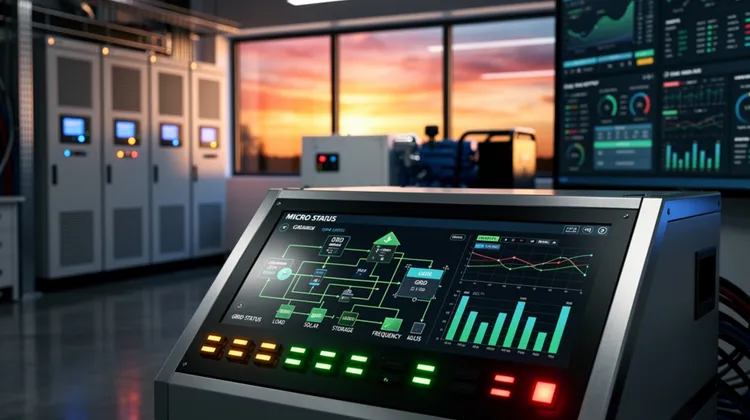
As the frequency of extreme weather events and grid instability rises, the concept of localized resilience has moved from a niche interest to a strategic imperative for industrial and critical infrastructure operators. The traditional model of a centralized, one-way power grid is increasingly vulnerable to cascading failures. In response, microgrids have emerged as a sophisticated solution for ensuring continuous operation when the main grid falters. These self-contained energy systems can disconnect from the larger grid and operate in “island mode,” providing a dedicated power supply for a facility, campus, or community. However, their successful implementation requires a deliberate optimization of design, control systems, and energy resources.
At its core, a microgrid integrates distributed energy resources (DERs) such as solar panels, wind turbines, combined heat and power (CHP) units, battery storage, and backup generators. The key to its resilience lies in the microgrid controller—a sophisticated software and hardware system that manages generation, storage, and load in real-time. This controller is the brain of the operation, deciding when to disconnect from the main grid, how to balance supply and demand, and when to reconnect safely.
The Architecture of Resilience: Design Principles
Optimizing a microgrid for resilience begins with a fundamental shift in design philosophy. Unlike systems designed primarily for cost savings or carbon reduction, a resilience-focused microgrid prioritizes reliability above all else. This requires a careful assessment of critical loads—those systems that must remain operational during an outage, such as life safety equipment, data servers, or manufacturing processes.
- Redundancy in Generation: A single source of backup power, such as a diesel generator, presents a single point of failure. A resilient microgrid incorporates multiple, diverse generation sources. For example, a facility might pair a solar array with a natural gas generator and a battery storage system. If one source fails, the others can compensate. The U.S. Department of Energy notes that microgrids with at least two distinct generation sources demonstrate significantly higher reliability during extended outages.
- Battery Storage as a Buffer: Battery storage is the linchpin of modern microgrid resilience. It provides instantaneous power during the transition from grid-connected to island mode—a period when traditional generators might take seconds to minutes to start up. This seamless transition prevents voltage sags and brownouts that can damage sensitive equipment. According to research from the National Renewable Energy Laboratory (NREL), microgrids with integrated battery storage experience a 99.9% reduction in transient voltage disturbances during islanding events.
- Intelligent Load Shedding: Not all loads are equal. A resilient microgrid uses smart controllers to automatically shed non-critical loads during an outage. This might mean dimming parking lot lights, reducing HVAC in non-essential offices, or pausing production lines. The controller prioritizes power to critical systems—server rooms, emergency lighting, refrigeration, or medical equipment—ensuring they remain operational even when total generation is limited.
Implementation: From Concept to Continuous Operation
Implementing a microgrid is not a simple plug-and-play upgrade. It requires a phased approach, starting with a comprehensive energy audit. This audit identifies all loads, their criticality, and their power quality requirements. For instance, a data center may require uninterrupted power (UPS-level quality) for servers, while a factory’s conveyor belts can tolerate a brief switchover.
Once the load profile is understood, the next step is selecting the right mix of DERs. This decision is heavily influenced by location, fuel availability, and regulatory environment. For example, a hospital in a solar-rich region might prioritize photovoltaic (PV) arrays with battery storage, while a manufacturing plant in a cold climate might favor CHP systems that provide both electricity and heat.
- Control System Integration: The microgrid controller must communicate seamlessly with all DERs, protective relays, and building management systems. Modern controllers use advanced algorithms—often incorporating machine learning—to predict load patterns and optimize dispatch. For example, a controller might pre-charge batteries during off-peak hours when solar generation is abundant, ensuring full capacity for a predicted evening outage.
- Testing and Commissioning: A microgrid that has never been islanded is a theoretical solution. Rigorous testing is essential. Operators must simulate grid failures, test the islanding sequence, and verify that all critical loads remain powered. This often involves staged blackout drills, where the facility is intentionally disconnected from the grid to validate performance. A study by the Electric Power Research Institute (EPRI) found that facilities performing quarterly islanding tests had a 40% higher success rate in maintaining uptime during actual outages.
The Cost-Benefit of Resilience
The upfront investment in a microgrid can be substantial—often ranging from hundreds of thousands to millions of dollars, depending on scale. However, for critical infrastructure operators, the cost of downtime is far higher. A single hour of unplanned downtime in a data center can cost over $300,000, according to a 2022 Ponemon Institute study. For hospitals, the stakes are even higher, involving potential loss of life.
Beyond outage protection, a well-optimized microgrid can generate revenue. During normal grid operations, it can participate in demand response programs, sell excess power back to the utility, or reduce peak demand charges. The U.S. Energy Information Administration (EIA) reports that industrial facilities with microgrids have reduced their annual electricity costs by an average of 15-25% through these mechanisms.
The Future of Localized Control
As the grid becomes more distributed and vulnerable, microgrids will evolve from emergency backup systems to primary operating modes. Advances in digital twin technology allow operators to simulate microgrid performance under thousands of scenarios, optimizing control strategies before deployment. Additionally, the rise of blockchain-based energy trading could enable microgrids to share power with neighboring facilities, creating a mesh of localized resilience.
For the uptime professional, the message is clear: the microgrid is not just a generator in a shed. It is a sophisticated, dynamic system that requires careful design, robust controls, and continuous testing. When optimized, it transforms a facility from a passive consumer of grid power into an active, resilient node capable of weathering the most severe disruptions. The investment in resilience is an investment in operational continuity—a principle that defines the core mission of Uptime Warriors.